 REUTERS
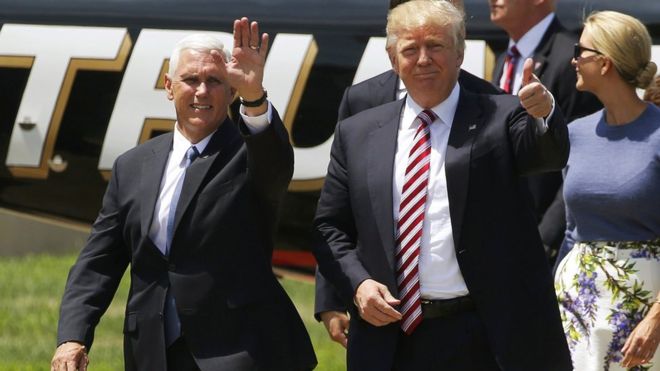
Donald Trump has been a very unorthodox Republican candidate since he descended that gold escalator to announce his candidacy last June.
He's staked out policy positions - on trade, immigration and even gay rights - that have run counter to long-standing Republican positions.
Now, however, he's the face of the party, and in many ways the party is bending to his will.
Here are five policy areas where Mr Trump has bucked the Republican line.
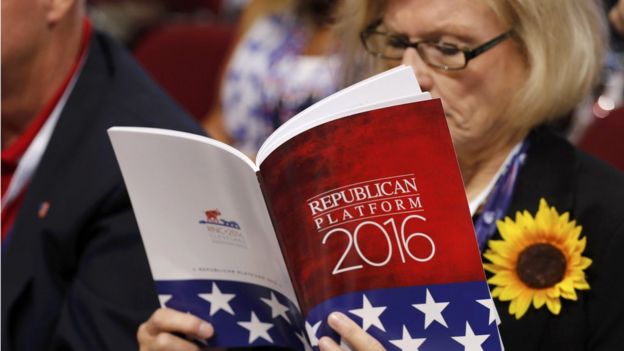
How has his influence on the party shaped that most tangible reflection of the party's views - the platform (manifesto) crafted here in Cleveland over the last week?
And what are the chances any of these proposals could see the light of day?
 GETTY IMAGES
Gay rights
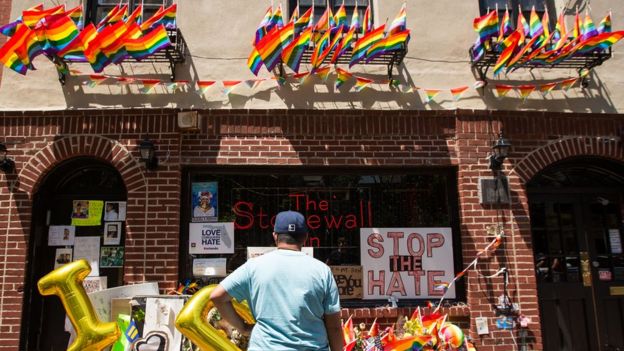
Where Trump stands: In the past Donald Trump has taken an accepting view of gay marriage. When musician Elton John wed his longtime partner, for instance, he tweeted: "If two people dig each other, they dig each other." During the campaign, however, he has asserted marriage should be between a man and a woman and states should not be forced to recognise same-sex couples.
He's expressed opposition to the North Carolina law that required transgender individuals to use bathroom facilities corresponding to their birth gender, however.
After the shootings at a gay nightclub in Orlando last month, Mr Trump directly appealed to gay voters, telling them he cared more about protecting them from anti-gay Islamic radicals than his Democratic opponent, Hillary Clinton.
Republican platform: The party is quite clear that it views "traditional" marriage between a man and a woman as "the foundation for free society", touching on it in two separate sections. It condemns the Supreme Court decision legalising gay marriage and asserts that "every child deserves a married mom and dad".
The platform also accuses Barack Obama of imposing "a social and cultural revolution upon the American people by wrongly redefining sex discrimination to include sexual orientation or other categories". It calls efforts to allow transgender individuals to access single-sex facilities of their choice "illegal" and "dangerous".
The rub: The Supreme Court has spoken, Democrats are drawing battle lines on LGBT rights and Mr Trump is apparently ambivalent. While the social conservatives have taken a firm stand in the platform - and they faced little opposition from Trump's team - they're likely fighting a losing battle.
 REUTERS
National security
Where Trump stands: For Mr Trump, national security begins - continues and nearly ends - with a 2,000-plus mile impenetrable wall along the mountains, deserts and plains of the US border. He estimates the cost of the project to be $12bn (others put it at nearly twice that). Whatever the cost, Mr Trump says Mexico will pay for it - possibly through tariffs, visa fees and the threat of ending remissions from individuals in the US.
Mr Trump has also called for greater investment in the US military, saying it should be "funded beautifully". He has called into question US commitments to foreign alliances and mutual defence agreements, including with Nato and South Korea, saying that Americans are carrying too much of the financial burden.
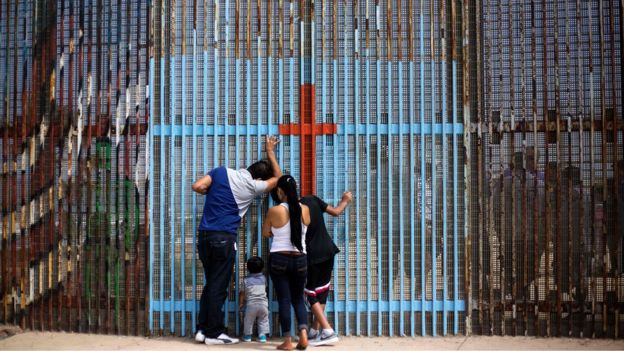
Republican Platform: In past platforms, the party has called for a barrier along the US-Mexico border and increased funding for border security. Now, however, that's not enough. The wall "must cover the entirety of the southern border and must be sufficient to stop both vehicular and pedestrian traffic".
The party also dusts off its traditional call for increased military spending, offering Ronald Reagan's old slogan of "peace through strength". It calls into question arms limitation treaties and says that while the US must work within international alliances like Nato, Republicans "demand" that European nations invest more in their armed forces.
The rub: When it comes to boosting military spending, Mr Trump and the Republican establishment are singing from the same hymnal. The nominee's views on a border wall, however, are the previous Republican position on steroids. It's been labelled impractical and unaffordable by Democrats, who will fiercely resist the proposal.
 GETTY IMAGES
Immigration
Where Trump stands: Mr Trump made international headlines last December when he called for temporarily closing the US border to all Muslims "until we can figure out what's going on". He's backed away from the position recently, however, saying it's merely a recommendation and the ban would only apply to nations with a "proven history of terrorism" against the US or its allies.
He launched his campaign by roundly condemning undocumented immigration from Mexico, accusing the nation of sending drug-dealers and rapists into the US.
He's also called for mass deportations of the 11 million undocumented immigrants currently living in the US, although he has made fewer mentions of that in recent days. He's taken a position against automatic citizenship for those born on US soil and said legal immigration should be reduced.
Republican Platform: The party offers a tip of the hat to legal immigrants, but warns that current levels of levels of immigration are contributing to US unemployment. The platform asserts that political, ethnic or religious refugees who cannot be "carefully vetted" should not be let into the country - "especially those whose homelands have been breeding grounds for terrorism".
The party takes a firm stance against any form of normalised status for undocumented immigrants and says illegal immigration "endangers everyone, exploits the taxpayers, and insults all who aspire to enter America legally".
The rub: Four years ago, many Republicans actively pressed for immigration reform, but the 2016 campaign trail is now littered with the political corpses of the pro-immigration candidates. Mr Trump clearly redefined the playing field for his party - and the November election will present voters with a sharp contrast with pro-immigration Democrats.
Trade
Where Trump stands: While the party platform's position on trade is a scant five paragraphs, Mr Trump routinely condemns what he sees as "unfair" trade deals like the North American Free Trade Agreement (Nafta) and the Trans-Pacific Partnership (TPP). His website has an entire section just covering his proposed policy changes to US-China trade.
Mr Trump has said past trade deals were poorly negotiated, without protections for US workers and intellectual property - and that he would rework them to put US priorities first. He's called the TPP "the rape of our country" and suggested that US trading partners who are competing unfairly could face massive tariffs (an action that would almost certainly be penalised by the World Trade Organisation).
He has also said he would punish any US companies that moved their production facilities abroad to take advantage of lower prevailing wages.
Republican Platform: The party - a long-time proponent of free trade deals - tries to differentiate between "carefully negotiated trade deals" that create millions of US jobs and those that do not protect US interests or are not adequately enforced.
The party removed all references to the Trans-Pacific Partnership - a sharp difference from four years ago, when the platform called for its completion so the US could have greater access to Asian markets.
The platform condemns Chinese currency manipulation and says the nation subsidises its products to "thwart American imports".
The rub: Trade offers the best example of the revolution Mr Trump has wrought within the Republican ranks. Traditional conservatives - including many still in Congress - view free trade as an extension of their free-market worldview. Meanwhile, Mrs Clinton has backed away from past support for free-trade deals, as she confronts a rebellion within her party, as well.
 PA
PAForeign policy
Where Trump stands: Mr Trump has called US foreign policy "a complete and total disaster", saying that it has "no vision, no purpose, no direction and no strategy". His proposals alternate between a more robust pursuit of US interests on the international stage while avoiding costly engagements or entanglements.
He's condemned the US war in Iraq, Obama administration actions to overthrown the government in Libya and what he says is a hamstrung effort to fight the so-called Islamic State in Syria and Iraq. He's said that there will be "no daylight" between US and Israel and has pledged to reopen the "disastrous" nuclear-programme negotiations with Iran.
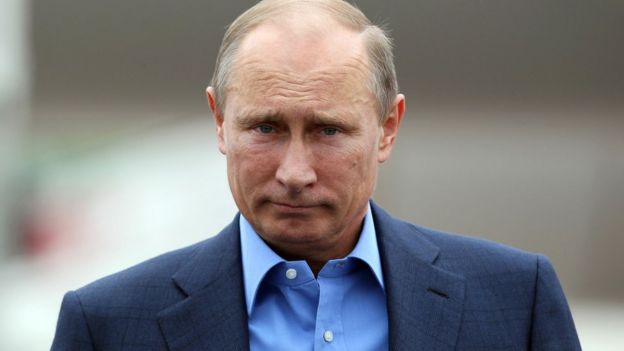
Mr Trump has spoken favourably about Russian President Vladimir Putin, saying the two would "get along very well". When he talks about relations with China, it is almost always within the context of trade and the economy.
He has said, above all, the US must be "unpredictable" with its foreign policy so that its adversaries will not be able to anticipate
Republican platform: The party says Donald Trump will not be bound by the recently concluded Iran deal, which it contends allows the nation to continue to sponsor terrorism and develop nuclear weapons. It calls for the destruction of the IS (sans specific details) and says unconditional support for Israel is "an expression of Americanism".
In the Asia-Pacific region, the platform says North Korean nuclear weapons programme must be irreversibly dismantled. It accuses the Obama administration of "emboldening" the Chinese government and explains that it is taking a harder stance toward the Chinese because its liberalising policies have been reversed as part of a "return to Maoism".
It condemns the "erosion of personal liberty and fundamental rights" in Russia, but says the US is "determined to maintain a friendship". The harsh condemnations of Russian involvement in Ukraine present in the 2012 platform were removed.
The platform also has a few kind words for Mexico, a perennial Trump punching bag: "Their rich cultural and religious heritage, shared by many millions of our fellow citizens, should foster greater understanding and co-operation between our countries."
The rub: Mr Trump's foreign policy has largely been a hodgepodge of positions, so it was somewhat unusual that his team took an active interest in watering down the platform's anti-Russian language. In other areas - where Mr Trump has expressed less direct interest - it's more traditional Republican tough talk.


